Now more than ever, consumers are trying to avoid spending money, and for many, that means holding on to their vehicles longer. OEC’s The U.S. General Auto Repair Shop Survey Report, created from the input of 700 auto repair professionals, highlights key trends shaping today’s repair landscape. Two key findings: Customers are becoming more cost-conscious and vehicle mileage is climbing.
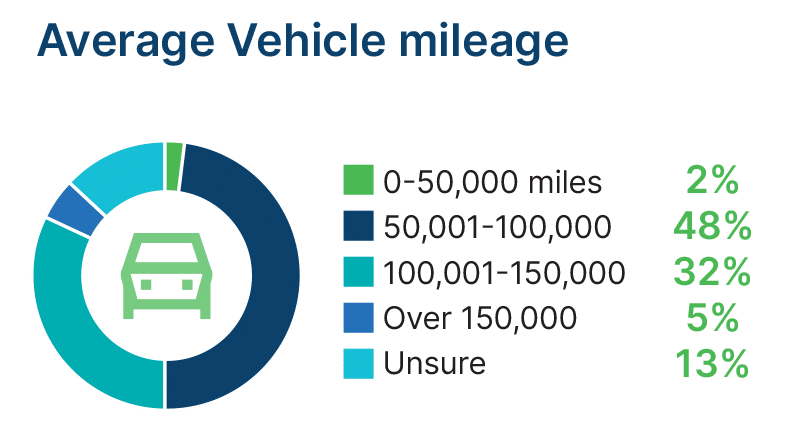
In fact, the average vehicle age in the U.S. reached a record 12.8 years in 2025. This means that folks are driving older cars that likely have higher mileage. In the U.S. General Auto Repair Shop Survey Report, we asked shops about the mileage on the vehicles they service most often. According to shop respondents, 80% of the vehicles have between 50,000 and 150,000 miles. Only 2% of vehicles are under 50,000 miles, while only 5% exceeded 150,000 miles.
So, we have customers who are trying to spend less and make their vehicles last longer, but are they coming in for regular maintenance to avoid those costlier repairs and stretch their vehicle’s lifespan? In terms of maintenance behavior, survey data shows that while some customers are consistent with upkeep, most fall somewhere in the middle (see chart below).
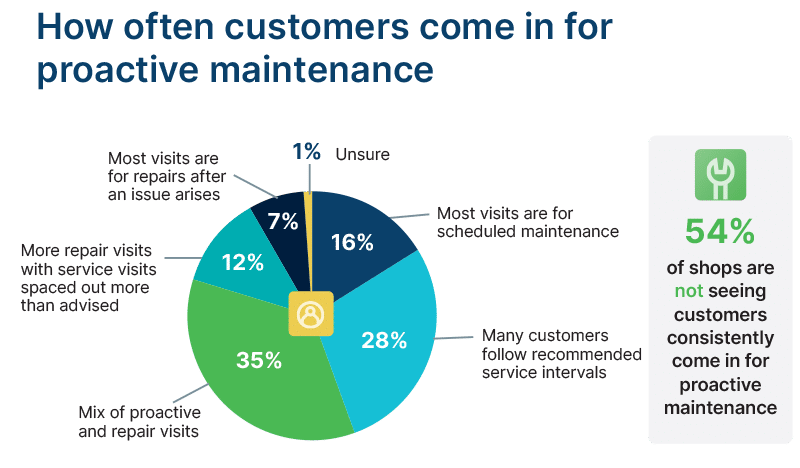
Most of the shops we spoke to (35%) reported a mix of proactive and repair-based visits, indicating that while maintenance remains a major driver of shop activity, reactive repair work still makes up a significant portion of visits as well.
The last thing someone trying to save money wants to hear is that they need to spend money. However, you can engage these customers with the right strategy and capture their routine business. All it takes is a transparent and educational approach to reach these customers, gain their trust, and their future business.
Want to see a breakdown of the customer behavior data and how it’s changed over the last year? Click here to read our blog: How Has Customer Behavior Changed?
Transparency
Nobody likes the feeling of waiting for a big bill to come, especially one that isn’t clear or easy to understand. Your customer is more likely to question their bill if they don’t understand it. If this causes them to think that you might be trying to sneak in fees or overcharge them, they are more likely to decline work and not seek your business out again. In fact, 62% of customers believe repair shops ‘often charge hidden fees’ without prior notice, and 41% of customers report ‘unnecessary repairs’ as the top issue affecting trust in repair shops. The best way to avoid this situation is to be transparent with the service you’re offering.
A great way to solve this is to offer complete itemized bills and make a point to discuss every line item with customers. Data shows that transparent pricing (with cost breakdowns) leads to 45% higher likelihood of repeat service. Your customers should know how much your technician’s hourly service rate is, how much the parts for their service are, and those items should be clearly labeled on their bill. If you know you’ve done your best to provide competitive prices and excellent service, make sure they’re aware.
When you’re transparent and honest with your customers, they are more likely to take your recommendations. Whether for bigger repairs or routine maintenance, this helps reduce customer pushback and eases concerns about being taken advantage of. In fact, the feeling that they might be getting taken advantage of likely comes from not having a solid understanding of their vehicle and its needs, or even a bad experience with other repair facilities. This means you have an opportunity to treat your customers with respect and provide knowledge that will empower them to become more proactive about maintenance and repairs.
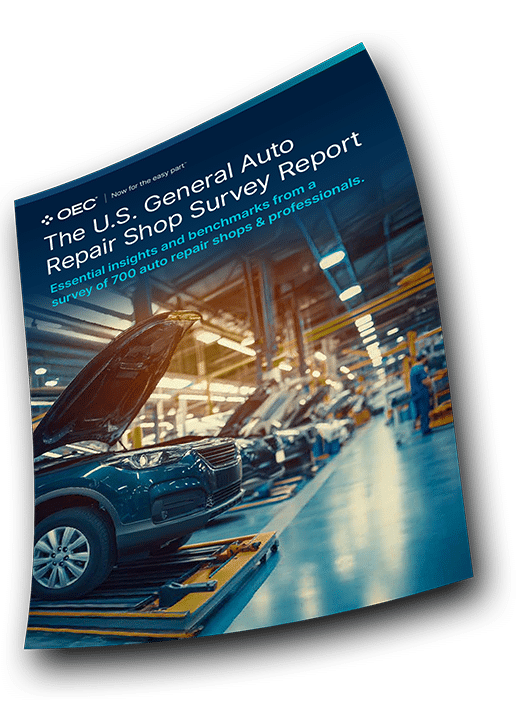
Access insights we gained from surveying 700 auto repair professionals: Download your copy of the U.S. General Auto Repair Shop Survey Report here!
Educate
You know the difference between proactive and reactive maintenance, but do your customers have a solid understanding of everything proactive maintenance entails and why it’s vital for the longevity of their vehicle? If you have customers so focused on not spending money that they decline routine work, they are likely setting themselves up to spend a lot more down the line.
This is where you need to educate them on why taking their car to the shop is not a one-off-as-needed service; it’s preventative and routine care, like going to the dentist. If you get a sense that your customer may not have a solid understanding of how often they should take their car to the shop and what for, this is a great time to introduce the concept of proactive maintenance. Explain what it is, how it differs from reactive repairs, and how it saves them way more money down the road.
Some examples you can share with them for proactive and reactive work:
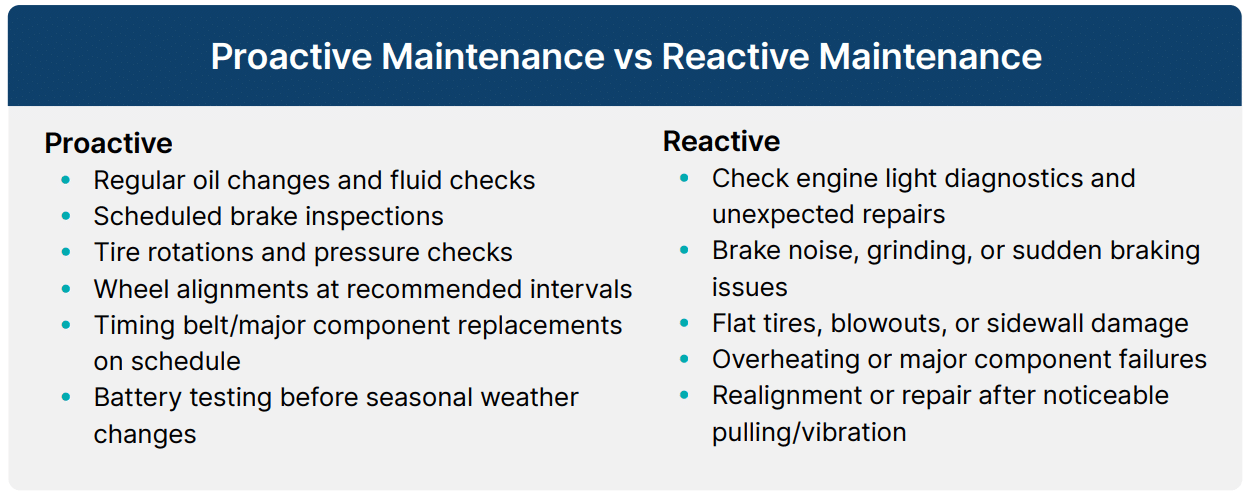
This list provides a good starting point, but your real-life expertise will make the difference. Do you have a story about someone who came to your shop with a problem that could’ve been avoided with regular maintenance checkups? Do you have an idea of how much money that could’ve saved them? Those are the stories that will impact your customer and make them take what you’re saying seriously. If they understand that putting off replacement tires could lead to a blowout that will cost much more than the cost of a new tire, they are more likely to follow maintenance recommendations.
Trust
At the end of the day, your customers need to feel that while this is a business interaction, it’s one backed by care for their well-being and professional service. They need to trust that you’re there to keep them and their vehicle safe, and not to mislead or overcharge them. Being transparent helps them know that nothing is hidden on their bill and everything will be properly explained to them. Customer education helps them understand that your recommendations are rooted in years of expertise and an understanding of how vehicles work. Pair these together, and you will help build a trusting relationship.
Once your customer trusts that you are looking out for them, they will not only want to follow your recommendations, but are likely to return to you for service. While these conversations may feel taxing, they build long-term customer relationships that will help sustain your business.