Below is an excerpt from the OEC U.S. General Auto Repair Shop Survey Report. Inherited from PartsTech, and in the spirit of the annual State of General Auto Repair Shops in the U.S. Report, OEC surveyed 700 shops and spoke with industry experts to bring you a report with key trends, benchmarks, and free resources to help you uplevel your shop in 2026. Download the report to get insights you can use right away to improve your shop, increase revenue, and stay ahead of common industry challenges.

From the time it takes to write a repair order (RO) to a shop’s gross annual revenue, operational data tells a shop’s story. In our recent survey of 700 repair shops across the country, we got a big picture look at the trends behind shop operations and financial performance. Here’s a look at the story the data is telling us and the strategies driving shop success.
Average Labor Rate
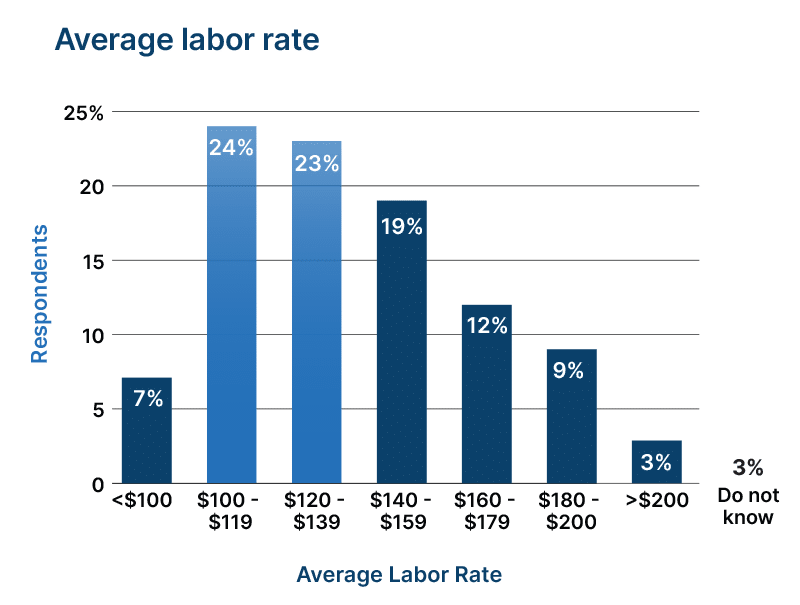
Shop labor rates, like most comparative trends between shops, vary based on the shop’s specialty, size, and location. This year’s survey participants identified an average labor rate of $100- $119 (see chart). Nearly 50% of respondents selected an average labor rate between $100-$139. On the lower end of the labor rate range, 7% of shops identified an average labor rate of $100 while on the higher end, 3% of shops identified labor rates above $200. Additional average labor rate responses include: $140-$159 (19%), $160-$179 (12%), and $180-$200 (9%).
Average repair order (ARO) value
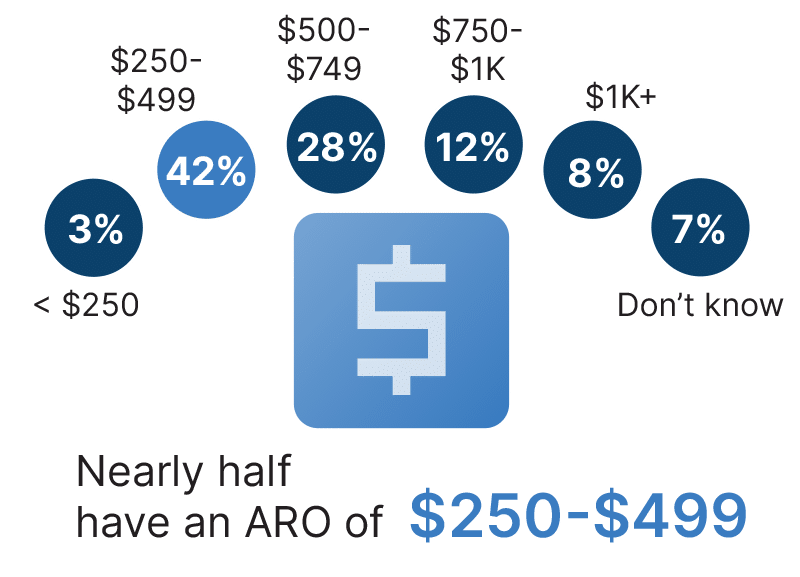
A shop’s average repair order (ARO) provides a look at the value of each vehicle that pulls into that shop. Like labor rates, ARO differs based on types of repairs and specialties, but does provide a strong indicator of the overall health of the business. This year, ARO values ranged from less than $250 to more than $1,000. The majority of participants (42%) identified their ARO value as $250-$499 (see chart). At the lower end of the range, 3% of shops identified their ARO as being under $250 while 8% of respondents reported an ARO of $1,000+. Additional ARO responses included $500-$749 (28%) and $750-$1,000 (12%).
New to PartsTech and want to learn about how it can help you save 15 minutes per RO? Create your free account today!
Click HERE to Learn More & Get Started
How to positively impact average repair order value
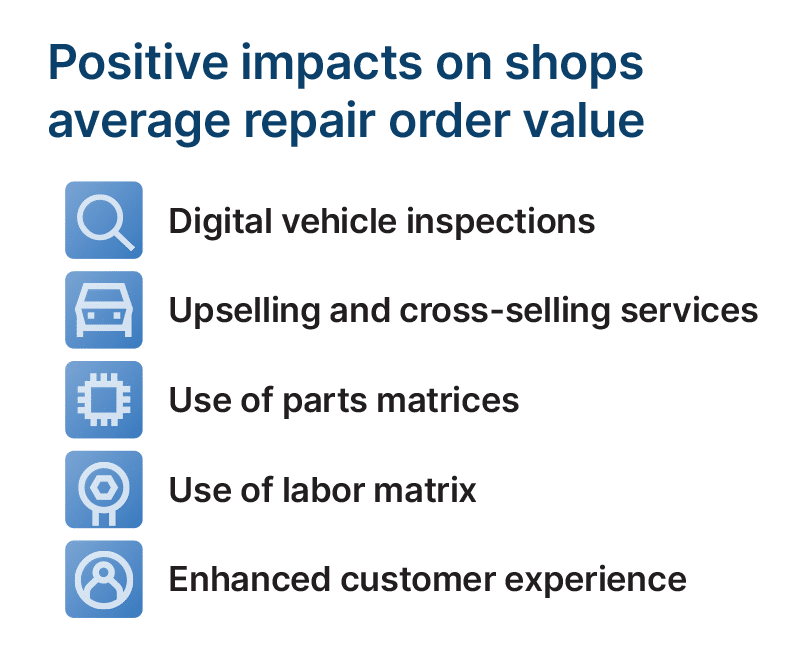
When asked to select the top value drivers for ARO – or how shops increase ROs by providing increased value to the vehicle owners – participants were given a range of options, from Digital Vehicle Inspections to marketing & promotion campaigns, and identified the top ARO drivers as: Digital vehicle inspections, upselling and cross-selling services, use of parts matrices, use of labor matrix and enhanced customer experience.
In addition to the top 5 ARO value drivers, shops also identified these services or programs as contributors to increased ARO:
- Digital estimate approvals via text or email
- Service advisor sales training
- Customer retention programs
- Marketing and promotions
- Offering comprehensive maintenance packages
- Strong customer experiences & relationships
- Repair quality & expertise
Takeaway for shops
Most surveyed shops are operating with average labor rates between $100–$139 and an ARO of $250–$499. However, industry experts caution that current labor rates remain too low, directly contributing to technician shortages and long-term staffing challenges. Shops looking to grow revenue don’t necessarily need more cars, but need to gain more value from the vehicles already coming through the door. Digital vehicle inspections, upselling and cross-selling, and the use of parts and labor matrices were identified as the top drivers of improved ARO. To move the needle, shop managers can:
- Audit their current labor rates against local market benchmarks
- Evaluate whether their team is consistently using inspection and estimating tools to their full potential
- Prioritize customer communication practices that build the trust needed to convert recommended work into approved repairs