The auto repair industry has a talent problem that is hiding in plain sight. And it’s not just a shortage of technicians today; it’s an issue building beneath the surface. The technician pipeline is narrowing, compensation and growth opportunities remain low in many shops, and the perception of the trade continues to drive potential talent toward other industries. For shop owners paying attention, this translates to a single operational risk: a shop built around people who are getting to the latter stages of their careers, with no structured plan to replace the knowledge, skill, and tenure that the current leaders will take with them into retirement.
The numbers tell the story
The technician shortage is not a projection or problem for another day. It’s already here, and most shops feel it.
According to the OEC survey, more than half of participating shop owners and managers said the technician shortage has a high or moderate impact on business. On top of that, nearly half of all respondents (46%) expect the shortage to get worse over the next five years

That pessimism is grounded in hard math. The Bureau of Labor Statistics projects approximately 70,000 openings for automotive service technicians and mechanics each year on average through 2034. Many of those openings come from the need to replace workers who retire or transfer to different occupations. Meanwhile, it’s projected that the industry will require nearly 1 million new entry-level technicians in the next five years as the average technician age sits at 40 and retirements are accelerating.
An aging workforce with a thin pipeline behind it
For those who responded to the OEC survey, the largest cohort (38%) was 35 to 44. Another 17% were between 55 and 64, and 5% were 65 or older. And the baby-boomer technician workforce is retiring in larger numbers each year, estimated as high as 9% annually. Meanwhile, the graduation pipeline, while improving, is not improving nearly fast enough. TechForce Foundation’s 2024 Supply and Demand Report noted that for the second year in a row, the number of post-secondary graduates across all four technician sectors increased, and cumulative employment across those sectors grew 2.8% year-over-year. While that feels like genuine progress, the same report is clear that demand still dwarfs supply, with replacement needs outpacing growth at a ratio greater than 4-to-1.
The longer arc of the graduation trend is equally concerning. Graduates from the ten largest providers of post-secondary automotive degrees declined 34% between 2012 and 2021, dropping from 40,658 completions to just 28,866. Recent upticks are a positive sign, but they represent a recovery from a decade of declining talent availability rather than a solved problem.
Want to get all your suppliers in one lookup? Create your free PartsTech account today!
Click HERE to Learn More & Get Started
The data behind the shortage
When we dig into what is causing the tech shortage, the picture gets more complex. When shop owners in the OEC survey were asked what drives it, the top five reasons cited were:
- Low compensation
- Negative professional perception
- Limited access to training
- Lack of awareness about the profession
- Competition from other industries
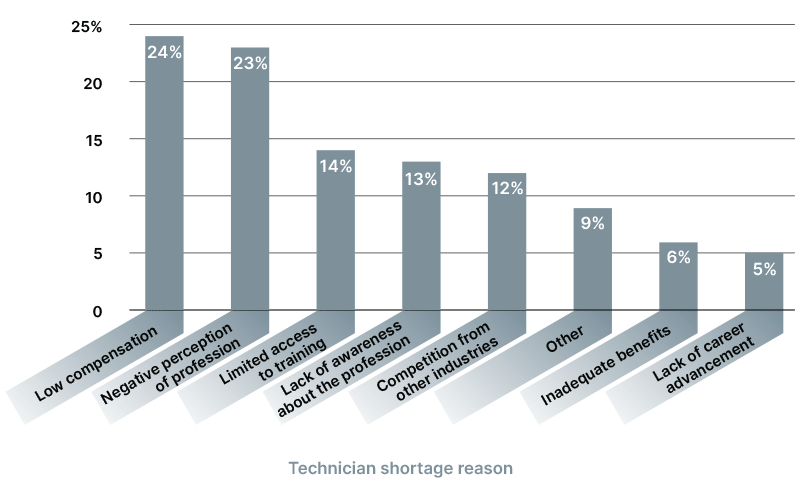
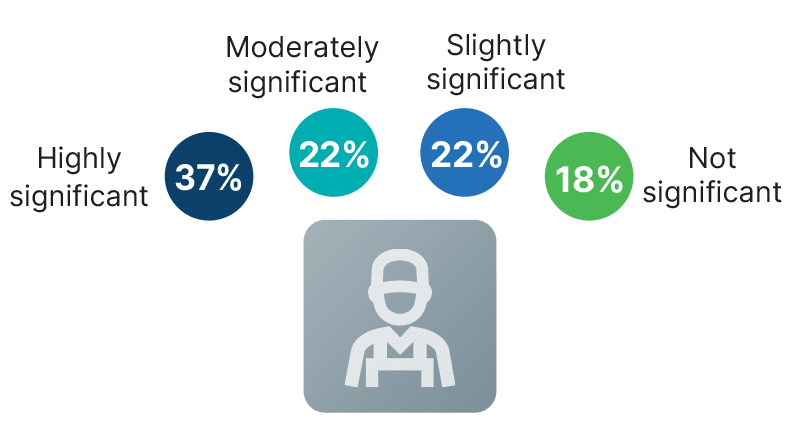
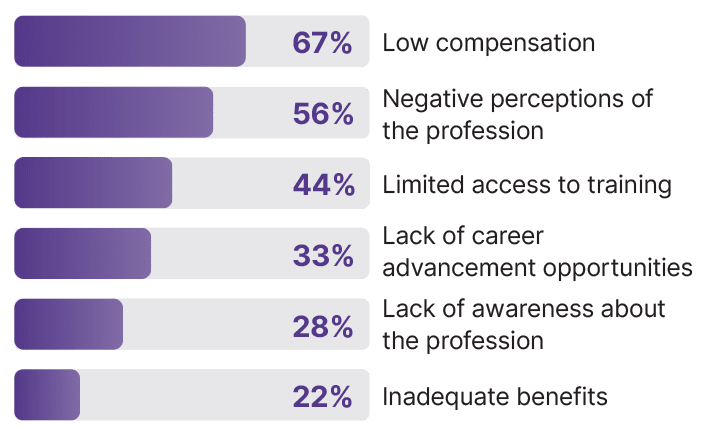
These are not isolated problems. They are interlocking forces that, unfortunately, reinforce each other. The technicians themselves see the issue even more sharply. A full 89% surveyed by OEC said the shortage is at least slightly significant in their daily work. When asked to name the primary causes, technicians responded:
The pay data from the Bureau of Labor Statistics reinforces why compensation is the top concern. The median annual wage for automotive service technicians and mechanics was $49,670 in May 2024. Against the backdrop of rising costs of living and competition from other skilled trades, that figure struggles to attract the next generation of technicians, with many seeking greener pastures elsewhere.
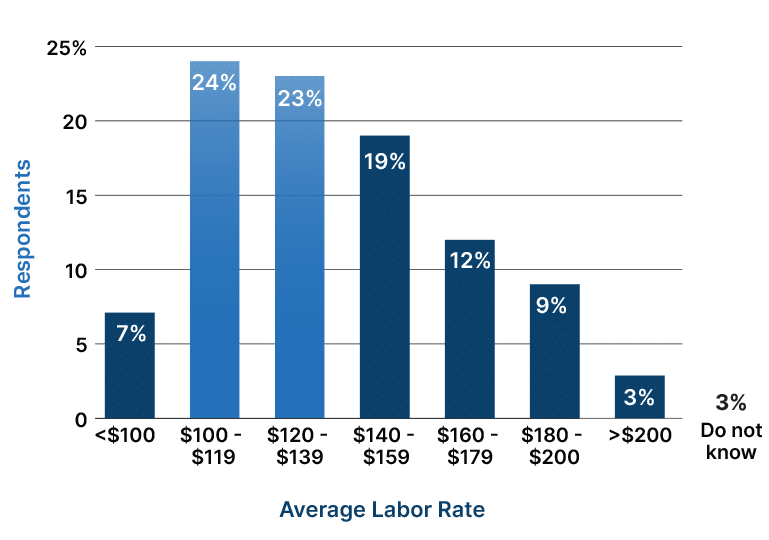
The OEC survey found that the most common average shop labor rate is $100 to $119 per hour, with nearly 50% of shops clustered between $100 and $139 (see chart on left).
As Cecil Bullard of The Institute for Automotive Business Excellence noted in the OEC report, labor rates have continued to rise but remain considerably lower than they need to be, directly feeding the shortage.

Access more insights from a survey of 700 auto repair professionals: Click here to download your copy of the U.S. General Auto Repair Shop Survey Report!
What top shops are already doing to keep techs in their bays
The OEC survey report also reveals the strategies shops are using to retain their best techs. Their approaches break down into five clear areas.
- Compensation and benefits designed to compete. Offering competitive wages is the single most effective strategy for attracting and retaining technicians, according to OEC survey respondents. Among technicians themselves, 72% said they plan to stay with their current shop because of competitive pay and benefits. The next highest motivating factor was clear career growth opportunities. As the data suggests, shops that treat compensation as a cost to minimize are losing talent to shops that treat compensation as an investment in their team and in the future of their shop.
- Apprenticeship programs that establish an internal pipeline. Rather than waiting for the broader talent market to improve, 53% of OEC survey respondents reported having some form of apprenticeship program, with 28% offering a formalized program. An additional 26% said they are currently considering launching an apprenticeship program. For shops that have not yet taken this step, the competitive gap, when it comes to talent acquisition, will only widen.
- Career paths that give technicians a reason to stay. The OEC survey data shows that 72% of surveyed shops provide some form of clear career path for technicians, with 30% offering structured, formalized advancement tracks. Nearly 70% of shops said they make a point to regularly or occasionally discuss career advancement with their technicians, and the correlation between those conversations and retention is direct. A technician who sees a future inside your shop is a technician who is not looking for one somewhere else.
- Investment in training and certification. Among shops offering career development, 61% provide advanced training and certification, and 57% encourage specialization in specific diagnostic or repair areas. Given that vehicle complexity is only increasing, shops that invest in keeping their technicians current on the latest vehicle technology and repair practices are building a competitive shop operation that pays dividends in quality, efficiency, and staff retention.
- Financial transparency. One of the more interesting findings in the OEC survey results is the role that financial transparency plays in retention. The report found that 74% of respondents share financial information with their technicians to help them understand how their work contributes to shop profitability. Shops that do this build a culture of shared ownership. When technicians understand how their output connects to the health of the business, they are more motivated, engaged, and committed to the team.
The competitive advantage is in front of you
The data all points to the same conclusion: the succession crisis is real, and it will not resolve itself. The age of the current workforce and the ongoing technician shortage are not trends any individual shop can fix on its own. What shop owners can control is their own response. Formalizing apprenticeships, building genuine career ladders, providing competitive pay, investing in training, and providing transparent communications are not just retention strategies, but also succession strategies. The shops building those foundations today are the ones that will have the talent, culture, and institutional knowledge to compete when the shortage reaches its peak, and the next generation of technicians are set to take over operations.